



Auspicious Light | Jingdezhen Handcrafted Linglong Porcelain Tea Infuser
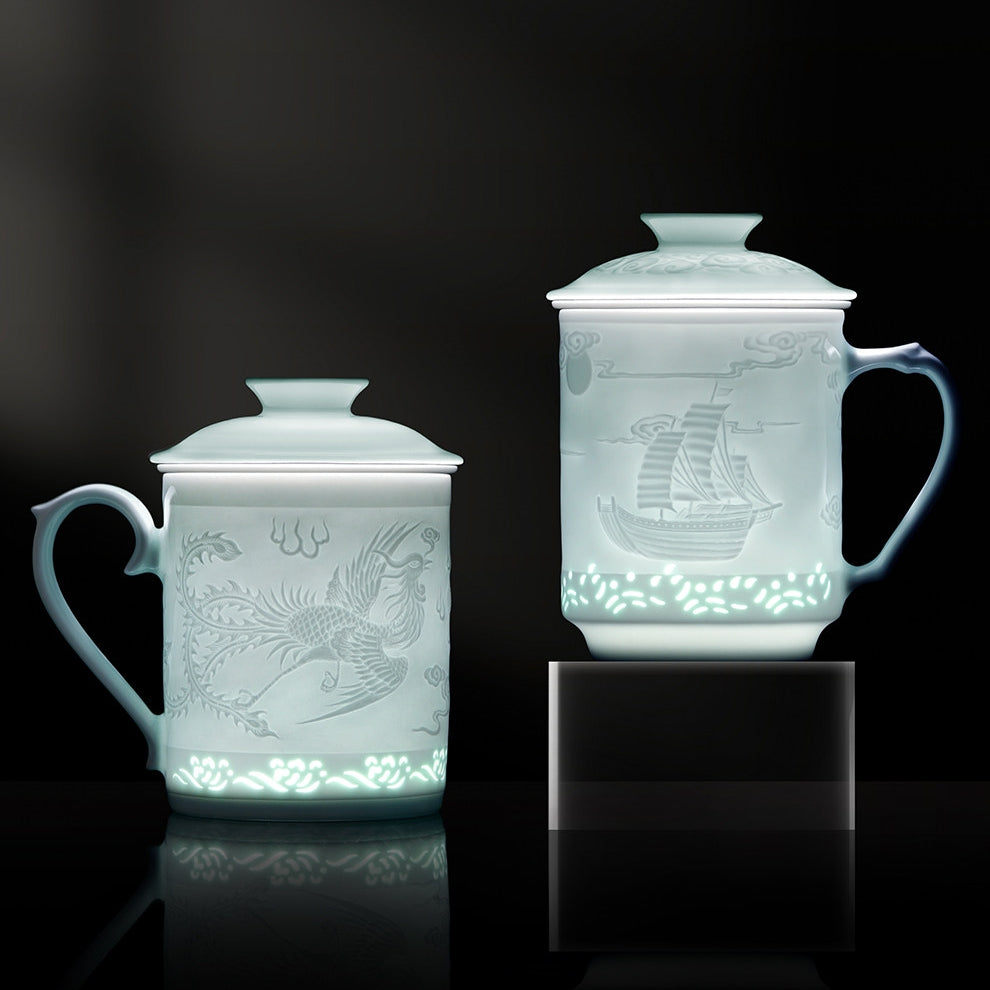
Auspicious Light brings together the cool translucency of Yingqing porcelain (影青瓷), the luminous detail of Linglong craftsmanship (玲瓏工藝) and finely carved Chinese motifs in a complete three-piece vessel for individual loose-leaf tea brewing.
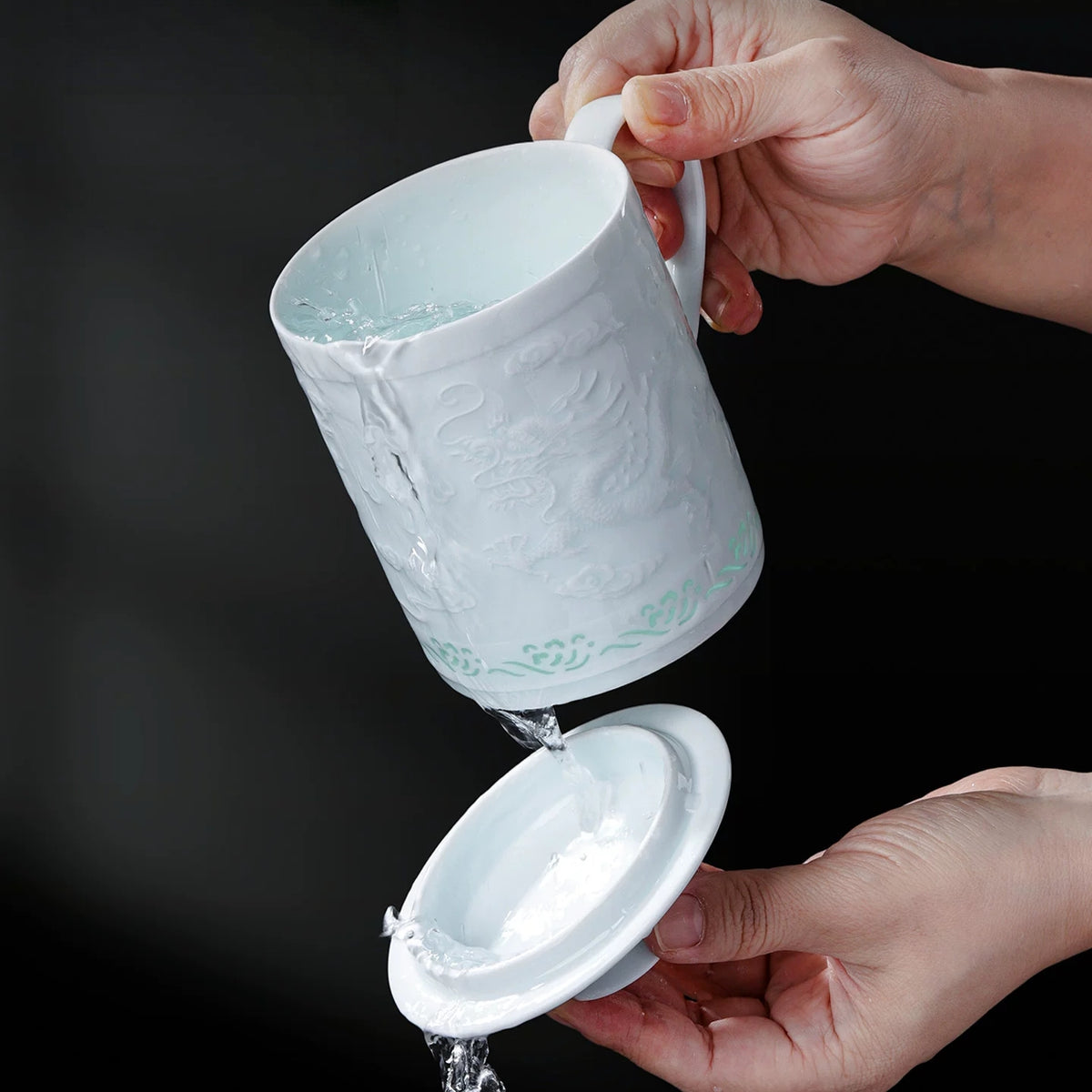
Handcrafted in Jingdezhen from high-fired white porcelain, the mug is finished with the subtle blue-white cast traditionally associated with Yingqing ware. The restrained glaze allows the carved imagery to remain soft under ordinary light, then become more defined as light moves across or passes through the porcelain.
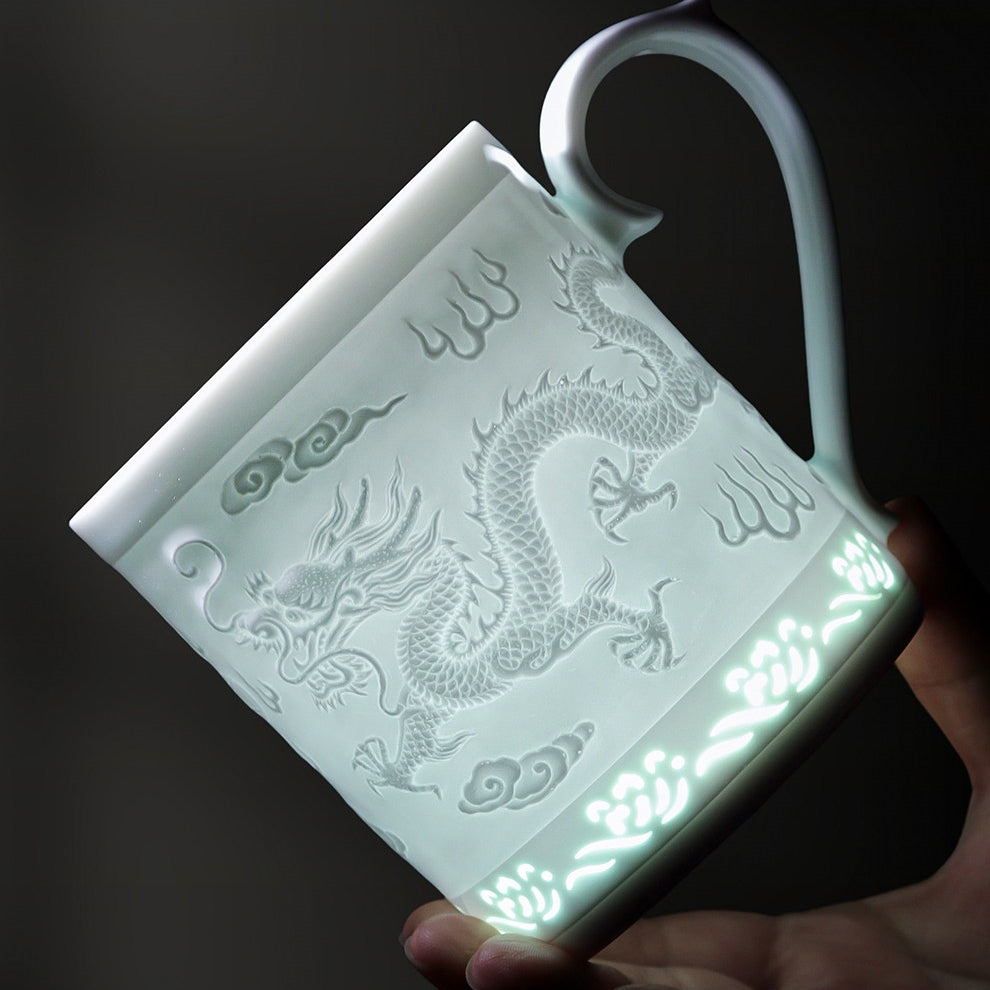
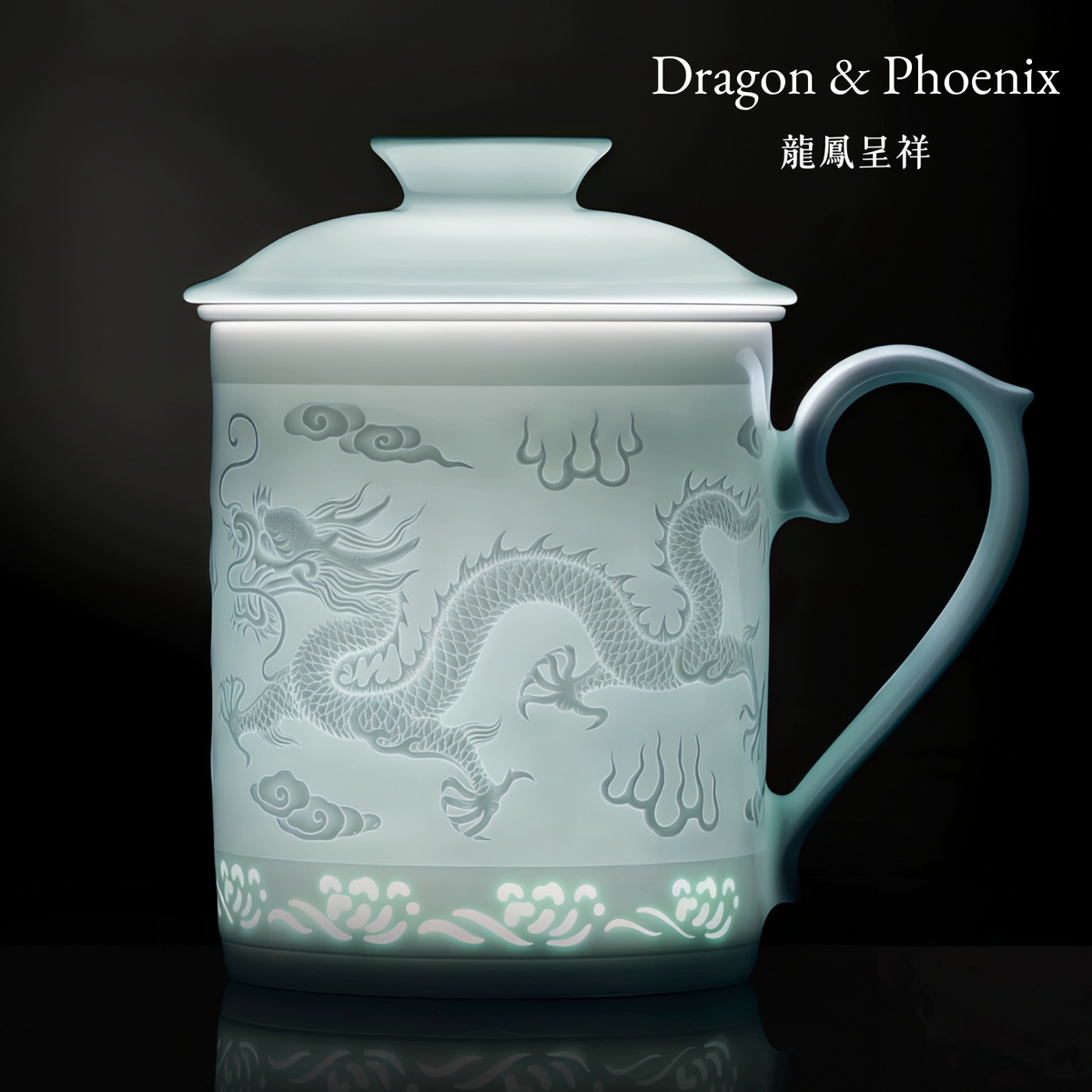
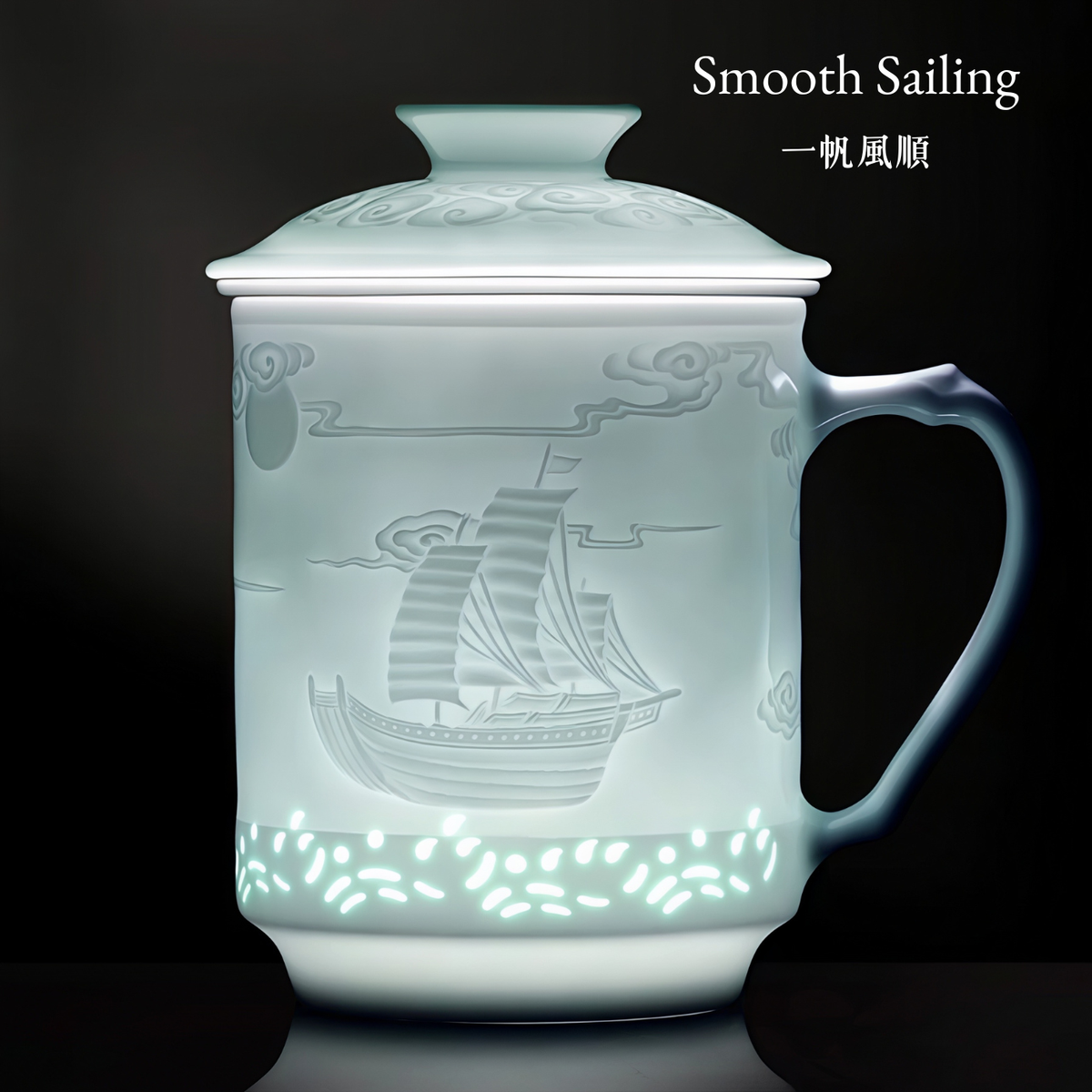
The decorative scenes are formed through relief carving, meaning the imagery is worked directly into the porcelain body rather than printed only on the surface. Fine changes in depth reveal scales, clouds, sails and flowing contours with a quiet dimensional quality, giving each design a presence that becomes more apparent upon close viewing.
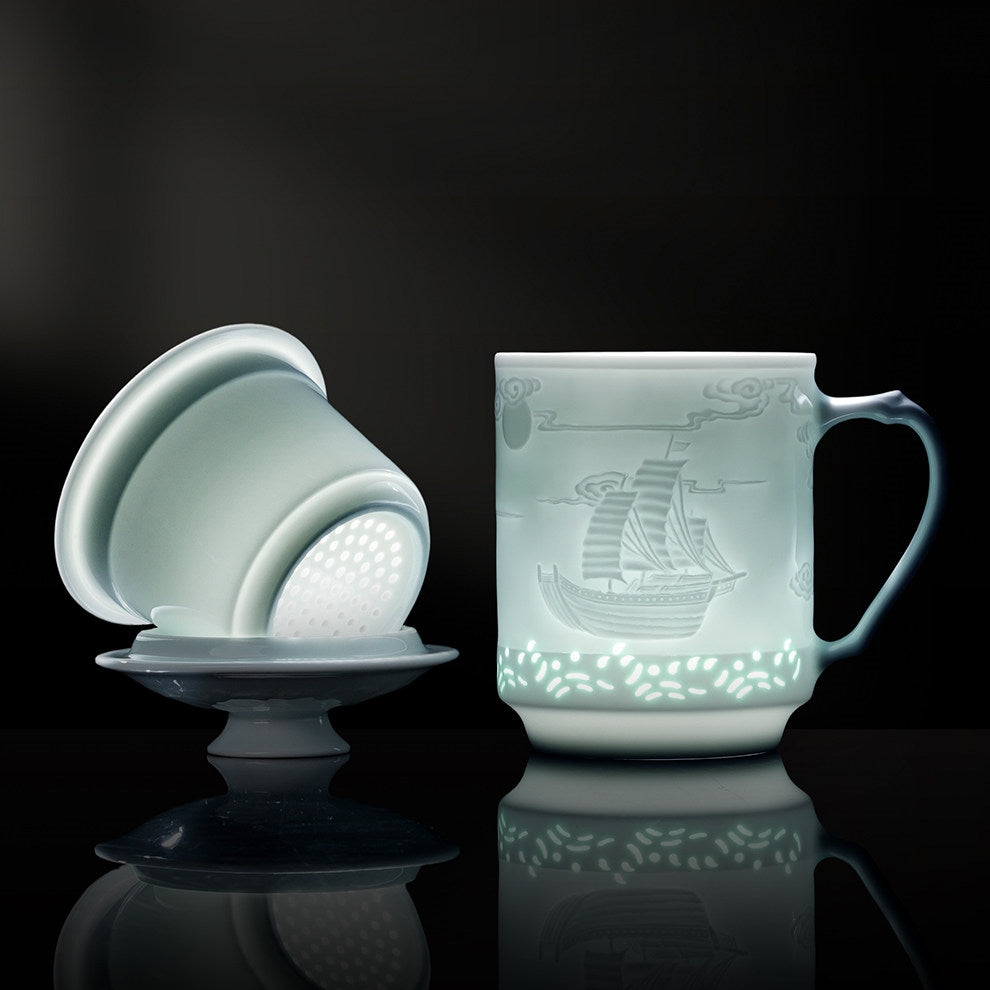
A lower band of Linglong openwork adds another layer of craftsmanship. Small decorative openings are carefully formed in the porcelain and filled with translucent glaze before firing. Once finished, the openings remain smooth and sealed while allowing light to pass through, producing the softly illuminated pattern visible around the base of the mug.
Two auspicious designs are available. Dragon Phoenix presents the traditional Dragon and Phoenix Auspicious Motif (龍鳳呈祥), a symbol associated with harmony, prosperity and auspicious union. The composition is enriched with carved cloud and flame motifs, creating movement around the principal figures.
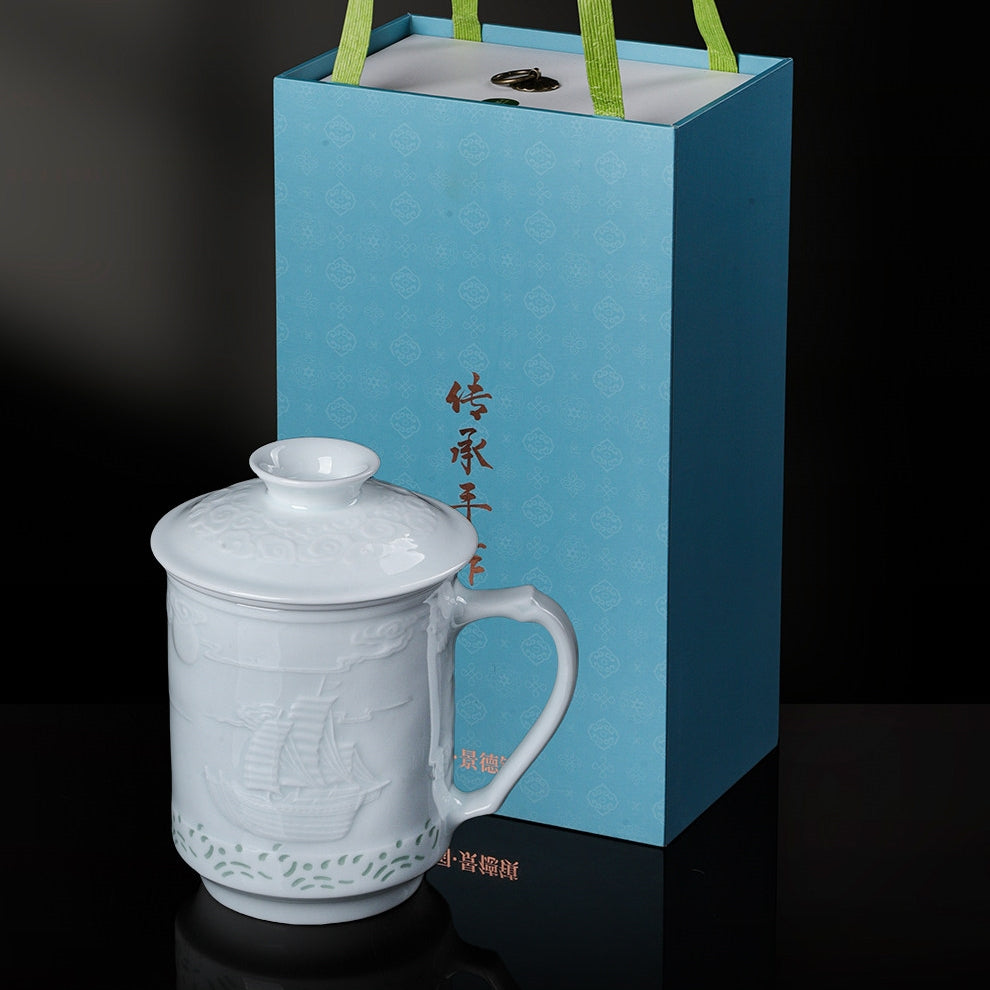
Smooth Sailing takes its inspiration from the blessing “May Every Journey Be Smooth” (一帆風順). A traditional sailing vessel moves beneath flowing clouds, expressing the wish for steady progress, favourable journeys and success without obstruction. The scene is rendered with the same restrained relief-carving technique, allowing the ship and sails to emerge gradually from the pale porcelain surface.
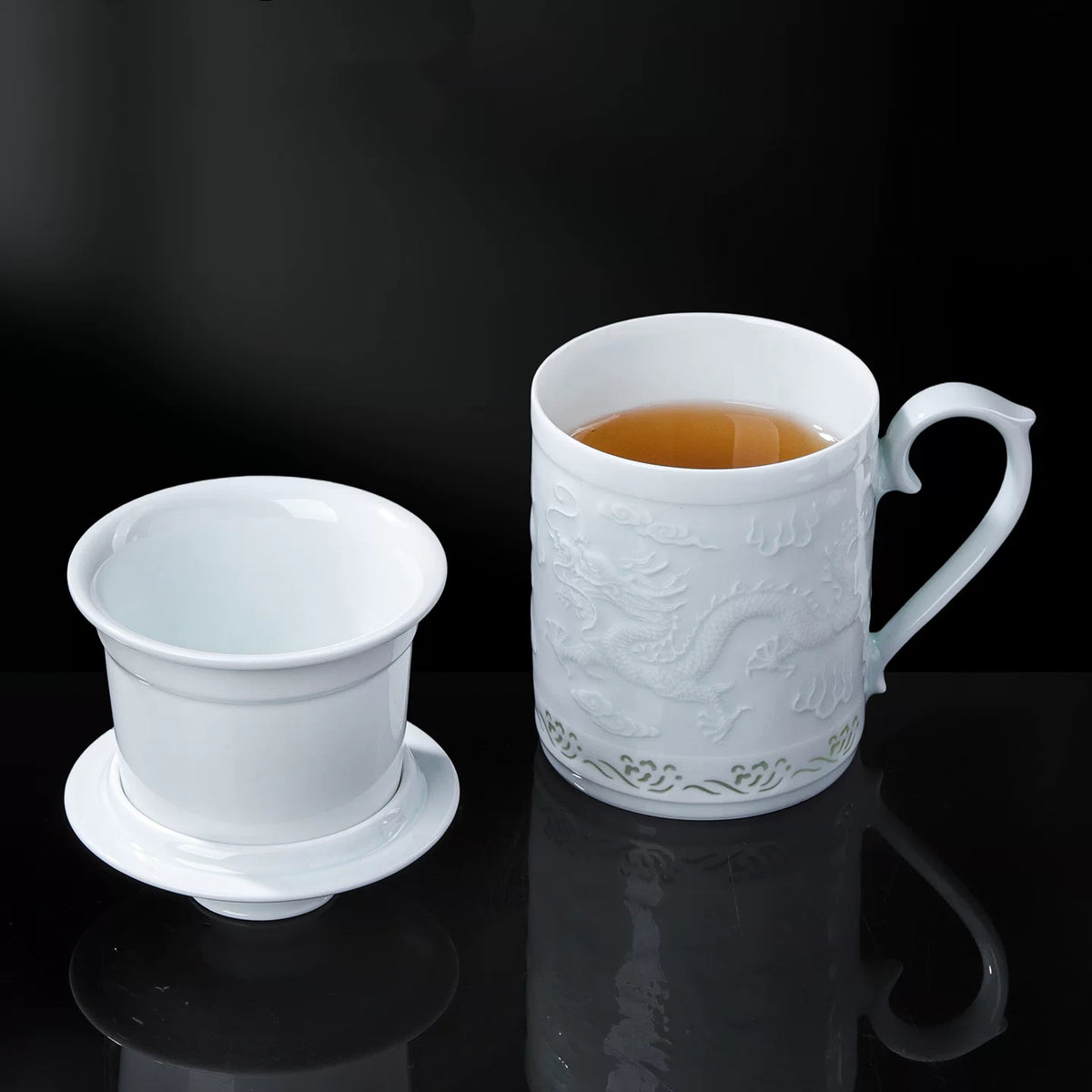
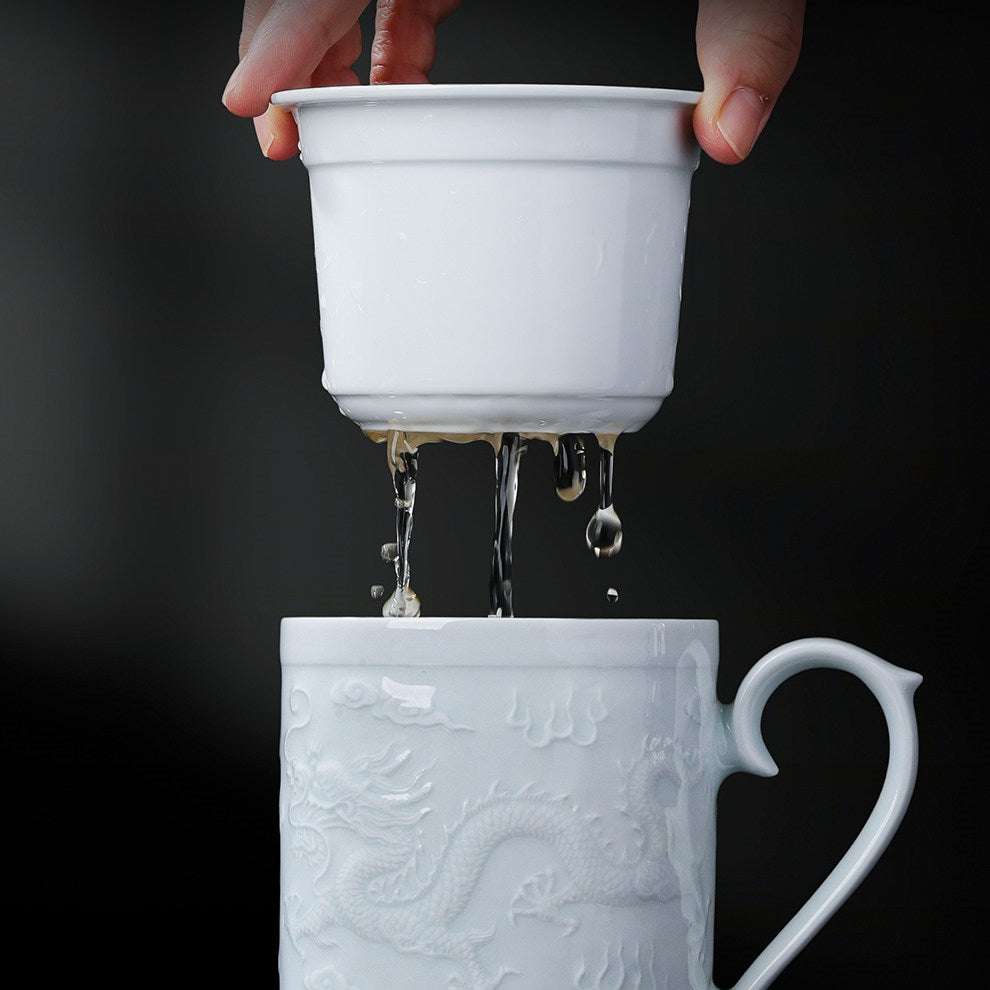
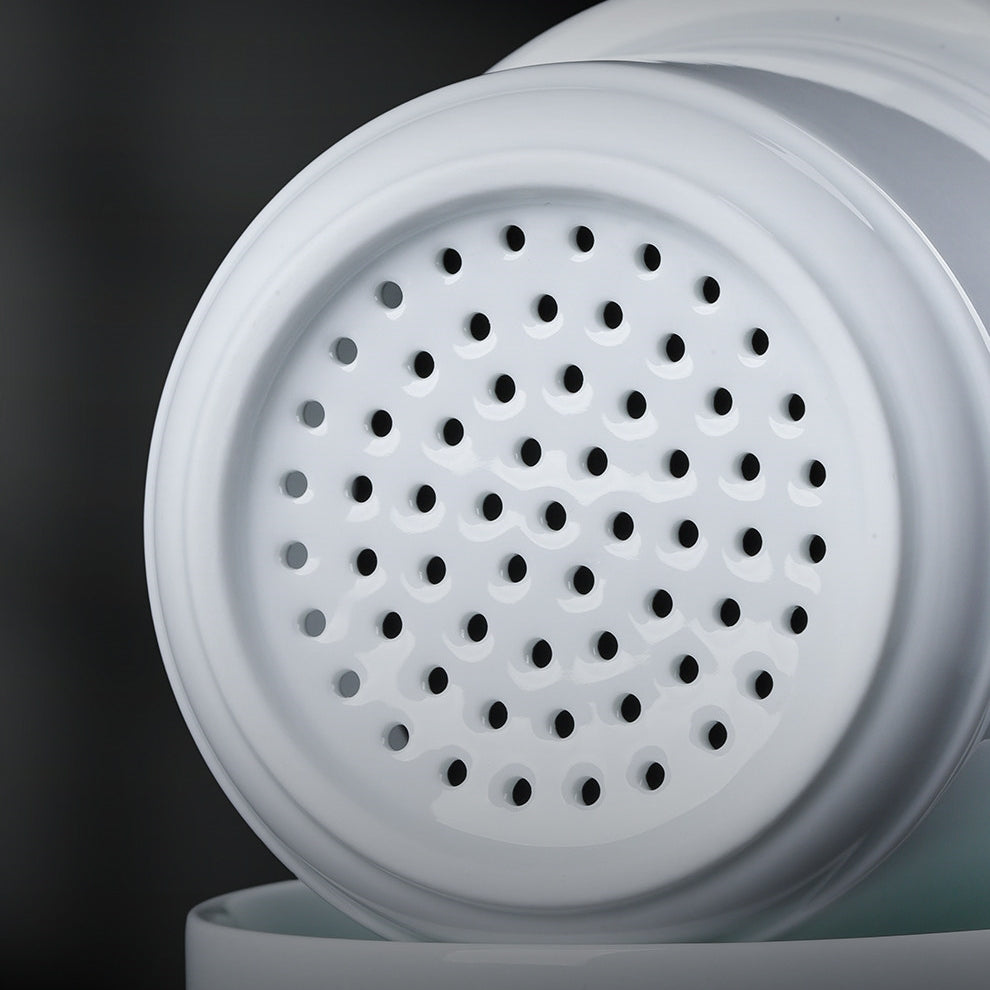
The mug is designed as a complete individual brewing system. Its three-piece construction includes the main vessel, a removable porcelain tea infuser and a fitted lid. The infuser is perforated with closely arranged drainage holes that allow water to circulate freely around the tea leaves while helping separate them from the finished liquor.
Once the tea has reached the desired strength, the infuser can be lifted from the mug and placed on the inverted lid. This keeps the brewing area neat and prevents the leaves from continuing to steep, making it easier to control the concentration of each infusion.
The generously shaped handle keeps the hand separated from the heated porcelain body and provides a secure grip during daily use. The pale interior also creates a neutral background for observing the colour and clarity of the tea liquor.
Suitable for tea at home, in a private study or at the office, Auspicious Light combines the convenience of an individual infuser mug with the material depth and symbolic decoration of traditional Jingdezhen porcelain.
• Origin: Made in Jingdezhen
• Product:
1 × Porcelain Mug
1 × Porcelain Tea Infuser
1 × Lid
Handcrafted in Jingdezhen with traditional porcelain-making methods, each with a unique design and finish.
Times
Orders take 2-3 business days to process after placing the order before shipping out.
Standard Shipping Times
• North America
United States (Mainland): 5 - 12 days
Alaska, Hawaii, and other US regions: 10 - 20 days
Canada: 5 - 14 days
Mexico: 10 - 17 days
• Europe: 5 - 12 days
• Australia/New Zealand: 6 - 14 days
• Asia
Southeast Asia: 5 - 8 days
Other Regions: 5 - 14 days
• Latin America: 10 - 20 days
• Other Countries: 10- 20 days
Express Shipping Times: 4 - 8 days
Available for Selected Products in the Following Countries:
• United States(Mainland)
• United Kingdom
• France
• Germany
• Italy
• Austria
• Spain
• Netherlands
Priority Shipping Times: 3 - 5 days
Available for Selected Products in the Following Countries:
• United States(Mainland)
• Canada
• United Kingdom
• France
• Germany
• Italy
• Austria
• Spain
• Portugal
• Netherlands
• Australia
• New Zealand
• United Arab Emirates
• Saudi Arabia
We offer a 7-day return & exchange policy. For detailed information Return, Refund & Exchanges
Choose options

A Legacy Of Porcelain
Jingdezhen: Where Porcelain Became an Art
For centuries, Jingdezhen has stood at the heart of Chinese porcelain. Its ceramic tradition stretches back more than 2000 years, with over a thousand years of official kiln history and more than six centuries of imperial kiln production. Generations of artisans refined the relationship between clay, glaze, brushwork and fire, establishing a tradition that would influence porcelain far beyond China.
From the luminous qingbai porcelain of the Song dynasty to the celebrated blue-and-white porcelain of the Yuan dynasty, and later the highly sophisticated works of the Ming and Qing imperial kilns, Jingdezhen continually advanced both technique and artistic expression. Its porcelain became admired for its refinement, translucency and craftsmanship, earning the city its enduring reputation as China’s “Porcelain Capital”.
Today, this legacy remains alive. Traditional hand-making methods continue alongside contemporary ceramic practice, preserving the accumulated knowledge of generations while allowing Jingdezhen porcelain to continue evolving.

Shaped By Hand
Where Form Begins
Every Jingdezhen porcelain piece begins with form. Guided by touch and experience, the artisan shapes the clay with close attention to proportion, balance and the natural response of the material. Small adjustments made at this early stage determine the character of the finished vessel.

Refined By Touch
Precision in Every Line
Once the body has partially dried, it is carefully trimmed to refine its profile, thickness and foot. Material is removed little by little until the vessel reaches the intended balance between lightness and strength. This quiet precision is one of the foundations of fine porcelain.


The Art Of Glaze
Depth, Light and Surface
Glaze transforms both the appearance and the tactile quality of porcelain. Applied with careful control, it influences translucency, texture and the way light moves across the finished surface. Its final character is revealed only after the intense heat of the kiln.


Detail By Hand
Crafted One Line at a Time
Decoration can begin directly on the porcelain body. With specialised tools, the artisan cuts and refines each detail by hand, creating depth and movement across the surface. The work demands both confidence and restraint, as every mark becomes part of the finished form.

Before The Fire Before
Prepared for the Kiln
Before firing, the porcelain must be allowed to dry gradually and evenly. Rows of unfinished vessels rest in the open air, giving remaining moisture time to leave the body before it enters the kiln. Even at this quiet stage, patience remains part of the craft.

Transformed By Fire
The Final Transformation
Firing is the moment when clay, glaze and craftsmanship are permanently transformed into porcelain. Inside the kiln, carefully controlled heat changes the structure of the body and fuses the glaze to its surface, revealing the colour, translucency and character that were only anticipated during the earlier stages.
In traditional Jingdezhen production, kiln firing demands close attention to temperature, atmosphere and timing. Even after every previous step has been completed with precision, the final result is only revealed once the kiln has cooled and the pieces are removed. Jingdezhen’s traditional porcelain-making process culminates in kiln firing, with each stage depending closely on the one before it.

Revealed At Last
From Clay to Porcelain
Only after firing does the complete character of the piece finally emerge. Form, glaze, colour and surface come together, revealing the results of every decision made throughout the process.
Fine Jingdezhen porcelain is valued not only for visual beauty, but for the balance between refinement and function. From the proportions of the body to the clarity of the glaze and the detail of its decoration, the finished vessel carries the accumulated work of many specialised hands.
What began as raw clay has now become porcelain, shaped by craft and completed by fire.